Dear President Barack OBAMA,
My main concern with our foreign affairs at this moment is how we are dealing with Libya.
Sincerely,
a concerned citizen
Monday, April 25, 2011

Thursday, April 21, 2011
Semester 两, Blog Eleven
If I were president and I had to resolve the Guantanamo Bay issues, I'm sure I would have a difficult time. First thing I would do would be to think about all the options I have and determine which one would be the most beneficial to everyone overall. I think that closing Guantanamo would be the best solution overall. But I would still have a discussion with a bunch of people and hear out what everyone else has to say. Me being me though, I would probably stick with my original ideals and proceed to close Guantanamo Bay ASAP. And I really mean ASAP, I would immediately see to it that Gitmo is to burned to the ground.
 |
| (picture of me as president) |
Wednesday, April 20, 2011
Semester Δύο, Honors Blog
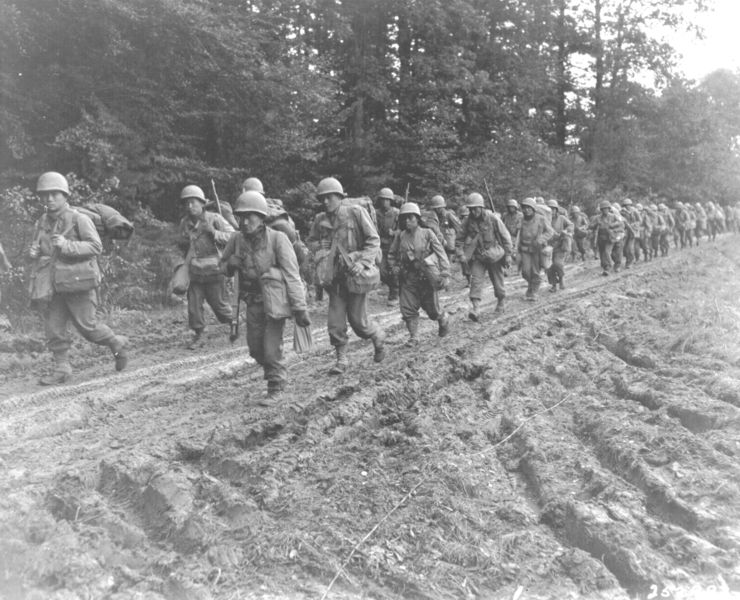
Dear person,
It is August 15th, 1945. I was drafted into the 442nd Infantry Regiment exactly one year ago. We may be sent home soon, but we will be sent as second class citizens. I am looking forward to coming home, but some of the other soldiers would rather stay and fight than be sent home as second class citizens. I hear that in Hawaii they are actually starting a peaceful movement against it, and I would definitely join if I could.
We came up with this song to give us hope during one of our fights.
"Four-Forty-Second Infantry— We're the boys of Hawai'i nei— We'll fight for you And the Red, White and Blue, And go to the front... And back to Honolulu-lulu. Fighting for dear old Uncle Sam Go for broke! HOOH! We don't give a damn! We'll round up the Huns At the point of our guns, And vict'ry will be ours! GO FOR BROKE! FOUR-FOUR-TWO! GO FOR BROKE! FOUR-FOUR-TWO! And vict'ry will be ours!"
Tuesday, April 19, 2011
Semester اثنان, Blog Ten
I talked to my mother about WW2 and I really didn't get much out of her. She says her family really wasn't affected by WW2 in a significant way. She did however, tell me that my grandfather, Felipe Justino Garcia Loyo, was a merchant marine during WW2. He told her that on his trade route he went to Japan and witnessed some pretty crazy things. He saw the bodies of Ally prisoners impaled on spikes in the streets of a certain town.
I also talked to my father about WW2, and again, did not get anything substantial. His father, John Stoner Ross, would have enlisted if he could have. He had terrible eyesight and they wouldn't allow him to serve. So he didn't. That's about it.
I also talked to my father about WW2, and again, did not get anything substantial. His father, John Stoner Ross, would have enlisted if he could have. He had terrible eyesight and they wouldn't allow him to serve. So he didn't. That's about it.
Thursday, April 14, 2011
Semester Два, Blog Nine - WW2 Imagery
WW2 War Photograph


- Was taken from between 1941 to 1945, from the book The War: An Intimate History. Photographer unknown, two soldiers unknown.
- This image really stood out to me. It really shows the destruction that war causes: these two soldiers on their own, taking cover behind a tank-- surrounded by a completely destroyed city.

- 1944 Nazi propaganda against the US. Other info unknown.
- Very symbolic propaganda against the US. They perceive USA to be this enormous, greedy, overly-patriotic, destructive, self absorbed monster. At the top in capital letters it says, "LIBERATORS" in bright red, basically saying these so called American saviors are actually horrible and annihilative monsters. It's black and white other than the red letters, the red on the flag, and the red on the missile-- not a very positive color scheme.

- "The Big Three in Portico of the Soviet Legation, Tehran" This is at the Tehran Conference of 1943 (Codename Eureka)
- This picture is of the three major allies leaders of WW2: Joseph Stalin, Franklin D. Roosevelt, and Winston Churchill. They all met at this meeting to discuss the war, and this was the first time Stalin was present. I like this picture as it shows how the Allies worked together to fight this war and make sure that they planned everything out in order to win.
Tuesday, April 12, 2011
Semester Երկու, Blog Eight
In a well developed, thoughtful piece of writing that uses direct quotes, explain the relationship between your honors novel and the time period that fostered it's creation.
I read On the Road, by Jack Kerouac. It was written in the 1950s, and it focuses heavily on the "Beat Generation". In On the Road, the main character Sal goes all over America (and Mexico) through various forms of transportation-- the most common being hitchhiking. Sal is a writer, as most of his friends are, and he explores the world and learns a lot about humanity and life in general. Sal is with Dean Moriarty for the majority of the book and together they explore the idea of the anti-conformist movement, the Beat Generation. Experimenting with drugs, sex, and the new jazz movement were some of the focuses of the Beat Generation, and Sal and Dean definitely experimented. If I were to label them under a stereotype they would be beatniks or hipsters; they were opposed to "mainstream society" and did crazy things like stealing cars, smoking a lot of marijuana in Mexico, having sex with prostitutes, etc. Jack Kerouac's On the Road was probably the book that best defined the 50's. Sal and Dean's ridiculous adventures showed us the beat movement of the 50's through an insane road trip.
I read On the Road, by Jack Kerouac. It was written in the 1950s, and it focuses heavily on the "Beat Generation". In On the Road, the main character Sal goes all over America (and Mexico) through various forms of transportation-- the most common being hitchhiking. Sal is a writer, as most of his friends are, and he explores the world and learns a lot about humanity and life in general. Sal is with Dean Moriarty for the majority of the book and together they explore the idea of the anti-conformist movement, the Beat Generation. Experimenting with drugs, sex, and the new jazz movement were some of the focuses of the Beat Generation, and Sal and Dean definitely experimented. If I were to label them under a stereotype they would be beatniks or hipsters; they were opposed to "mainstream society" and did crazy things like stealing cars, smoking a lot of marijuana in Mexico, having sex with prostitutes, etc. Jack Kerouac's On the Road was probably the book that best defined the 50's. Sal and Dean's ridiculous adventures showed us the beat movement of the 50's through an insane road trip.
Monday, March 14, 2011
Semester Duex, Blog Seven
Honors
World War Two (WWII) was a global war as the name implies, that lasted from 1939 to 1945. There were two sides to this war; the Allies and the Axis. The main members Allies consisted of the United States, Soviet Union, British Empire and more. The main members of the Axis consisted of Germany, Japan, and Italy.
D-Day or the Normandy Landings was one of the most significant days in the entire war. The Allies invaded Normandy Tuesday, 6 June 1944. It was a huge attack —"The operation was the largest amphibious invasion in world history, with over 160,000 troops landing on 6 June 1944. 195,700 Allied naval and merchant navy personnel in over 5,000 ships were involved."
It was an incredibly devastating assault, many allies were killed during the invasion. im falling asleep, sorry
It was an incredibly devastating assault, many allies were killed during the invasion. im falling asleep, sorry
Tuesday, March 1, 2011
Semester Dos, Blog Six
http://mmhmblog.blogspot.com/search?updated-max=2011-03-01T19%3A46%3A00-08%3A00&max-results=1
Marlene's pitches were pretty interesting. I though that the last one, where she says that she would talk about all the awkward moments sounds like it would be a funny and interesting article to read. Her first pitch was also pretty unique, she says that she would compare questions that she had before the internship to questions she now has after going through the internship experience. It's a pretty unique idea and I'd be interested to see how it would turn out.
Marlene's pitches were pretty interesting. I though that the last one, where she says that she would talk about all the awkward moments sounds like it would be a funny and interesting article to read. Her first pitch was also pretty unique, she says that she would compare questions that she had before the internship to questions she now has after going through the internship experience. It's a pretty unique idea and I'd be interested to see how it would turn out.
http://heberling-coffman.blogspot.com/2011/02/pitches-for-blog-5.html
Dylan's ideas were also pretty unique. I liked his pitch where he wanted to write his article about golf. He says that he talked about golf a lot with his mentor and that he would dedicate his article to talking about that. It might turn out to be an interesting and unique article about his relationship with his mentor and fellow employees. He could then go on to talk about work relationships in general and it could make for a pretty good article.
http://mairavierheller11.blogspot.com/2011/02/semester-two-blog-five.html
Maira's third pitch was definitely an interesting one. She wants to talk about what she did at her internship, but through the perspective of her camera or laptop. It sounds like it could really be a cool article, I've never really read anything like that. I'm assuming that she took pictures for the majority of the internship so it could be really cool, just telling her internship story through the lens of a camera.
Dylan's ideas were also pretty unique. I liked his pitch where he wanted to write his article about golf. He says that he talked about golf a lot with his mentor and that he would dedicate his article to talking about that. It might turn out to be an interesting and unique article about his relationship with his mentor and fellow employees. He could then go on to talk about work relationships in general and it could make for a pretty good article.
http://mairavierheller11.blogspot.com/2011/02/semester-two-blog-five.html
Maira's third pitch was definitely an interesting one. She wants to talk about what she did at her internship, but through the perspective of her camera or laptop. It sounds like it could really be a cool article, I've never really read anything like that. I'm assuming that she took pictures for the majority of the internship so it could be really cool, just telling her internship story through the lens of a camera.
Tuesday, February 22, 2011
Semester Due, Blog Five
Three Ampersand Pitches
IDEA ONE:
A day in my shoes. My internship was really strange in my opinion so just writing a an article on a typical day would be interesting. I came to internship at around 1:00-3:00pm did a whole lot of cleaning and trying to entertain myself, etc.
IDEA TWO:
I could write about the project I did. I made a commercial so that's pretty interesting. I would also want to talk about how the project only took like a week so I had the rest of the time to be an intern slave.
IDEA THREE
The last idea I have would be to focus more on what I learned during the internship. Although I had a really boring internship, I did learn quite a bit from it.idea 4 is all of these combined.
Monday, February 14, 2011
Semester Hai, Blog Four
By Luke Hatschbach
This article will probably be similar to my own. I had an extremely similar internship experience, so I think I will benefit from using this article as a reference. He talks about how boring his internship was and how he managed to entertain himself doing random things. I pretty much did the exact same thing.
Tuesday, February 8, 2011
Semester Dvě, Blog Three
http://www.interviewmagazine.com/film/mickey-rourke/
http://www.theatlantic.com/past/docs/unbound/graffiti/hunter.htm
This was another interesting interview on another very interesting person–Hunter S. Thompson. This interview starts out with a pretty lengthy intro which I haven't seen much in interviews. I liked this interview, from the very beginning you know what kind of person Thompson is. This interview shows how interesting of a person he is, and it makes me want to read his books (I've only seen the movie on his Fear & Loathing in Las Vegas)
This was a pretty interesting interview on Mickey Rourke, mainly on his role on The Wrestler. Christopher Walken interviewed him so that was pretty cool, but it was the editing that stands out. The editor took out parts that probably didn't need to be in the interview and added things in [brackets] when it was needed. They also had a nice layout where some powerful quotes from Rourke were at the top of the page.
http://www.theatlantic.com/past/docs/unbound/graffiti/hunter.htm
This was another interesting interview on another very interesting person–Hunter S. Thompson. This interview starts out with a pretty lengthy intro which I haven't seen much in interviews. I liked this interview, from the very beginning you know what kind of person Thompson is. This interview shows how interesting of a person he is, and it makes me want to read his books (I've only seen the movie on his Fear & Loathing in Las Vegas)
Thursday, February 3, 2011
Semester Duo, Blog Two
Recently (Well, the last book I read that wasn't for this class) I read Trainspotting and afterwards saw the movie. Both were truly well made and written. If you don't know what Trainspotting is, it's a novel by Irvine Welsh set in the late 80's where these crazy kids addicted to drugs try overcome their addiction (Not all of them) and they end up still getting in other forms of trouble. This book was really interesting–not only because of it's plot–but also because of the way it was written.The narrator changes almost every chapter. It was confusing at times, but it really made it a good book to read.
I thought it was really interesting because it wasn't your standard book. Like we learned in class today, Welsh has her own distinctive style. The book is essentially a bunch of short stories put together usually with different narrators for each one. I enjoyed this originality and I really liked reading it.
I thought it was really interesting because it wasn't your standard book. Like we learned in class today, Welsh has her own distinctive style. The book is essentially a bunch of short stories put together usually with different narrators for each one. I enjoyed this originality and I really liked reading it.
Tuesday, February 1, 2011
Semester Zwei, Blog One
What are the big ideas that you are taking from internship into the next steps in your life?
Well, one big idea I'm taking from internship is that I really hate doing your average intern work. Filing papers, organizing, setting everything up, etc is not something I want to do. This gives me motivation because I want to be successful and get a job where I could so something that's interesting and that I enjoy. I think that my internship was really helpful in a really boring way.
What are your plans for the coming semester?
What are your plans for the coming semester?
I'm planning on keeping up the good work and basically just improving all of my skills. My plan is to not procrastinate as much as I usually do (I put the pro in procrastinate) and I think all of my work will benefit from it. If I just do all my work, on time, and have it be quality work, I will get great grades no problem.
Friday, January 28, 2011
Internship: Week Four - FINAL WEEK
Describe your reflections on your internship project—what went well, what would you do differently, and what stands out to you?
A lot of things went well; I completed the project that I had been assigned by mentor before it was due. I was also able to help anyone staff members that needed it with no problem. If I could do this internship over again, I would not tell my mentor that I would be able to use a laptop to edit videos at the internship site, because I couldn't.
Friday, January 21, 2011
Internship: Week Three
Read another student's blog. What stands out to you? What experiences do you have in common? What contrasts do you see? What questions do you have?
What stands out is that he had to file papers and do simple work, which is a lot of what I have to do when I'm not editing. A question I would have for him, is what do you do to keep yourself entertained? I find filing and doing a lot of random grunt work to be really boring.
Describe how experiences at HTHMA have prepared you for your experience at internship.Well, all the editing and filming that I've been doing is easy for me because I've already done so much of it at HTHMA. It's pretty easy to edit videos now and I wouldn't really have known what to do if I didn't do it so much at school.
What stands out is that he had to file papers and do simple work, which is a lot of what I have to do when I'm not editing. A question I would have for him, is what do you do to keep yourself entertained? I find filing and doing a lot of random grunt work to be really boring.
Describe how experiences at HTHMA have prepared you for your experience at internship.Well, all the editing and filming that I've been doing is easy for me because I've already done so much of it at HTHMA. It's pretty easy to edit videos now and I wouldn't really have known what to do if I didn't do it so much at school.
Friday, January 14, 2011
Internship: Week Two
How do you see your role as a working professional in the future? (entrepreneur, employee, freelance, etc).
One of the teachers at the Recreational Music Center brought up an interesting idea. Some people want a person like me to record them doing whatever they do (e.g. a band playing a gig) This sounds like it would be pretty cool to do and I could see myself doing it. It's not that hard and I have all the equipment to do it.
What is the biggest challenge face at your internship?
The biggest challenge that I face everyday at internship is overcoming the boredom. My original fear has come true and I realize that this is incredibly boring. My average day at internship goes like this: walk in, start recording a lesson, record another lesson, etc. for 7 hours. However the filming portion of the project is done and now I just need to edit, which should be less boring and should also be easier.
One of the teachers at the Recreational Music Center brought up an interesting idea. Some people want a person like me to record them doing whatever they do (e.g. a band playing a gig) This sounds like it would be pretty cool to do and I could see myself doing it. It's not that hard and I have all the equipment to do it.
What is the biggest challenge face at your internship?
The biggest challenge that I face everyday at internship is overcoming the boredom. My original fear has come true and I realize that this is incredibly boring. My average day at internship goes like this: walk in, start recording a lesson, record another lesson, etc. for 7 hours. However the filming portion of the project is done and now I just need to edit, which should be less boring and should also be easier.
Tuesday, January 4, 2011
Internship: Week One
What are you excited about, nervous about and wondering about?
I am really excited to film all the students learning how to play musical instruments. I think it will be interesting but I'm also nervous about it being boring. Filming kids all day might end up being a little monotonous. Hopefully it will be interesting though.
Describe the project you'll do at internship, including the skills and technology you need to do it and what you hope your project looks like as a final product.
I will be recording students being taught by the teachers at the Recreational Music Center. I will use all the footage to create a commercial for the music center to play on their website. Once I record everything I will edit it on a friend's Macbook using Final Cut Pro. Hopefully the commercial will turn out great and will attract people to come and learn how to play some music.
I am really excited to film all the students learning how to play musical instruments. I think it will be interesting but I'm also nervous about it being boring. Filming kids all day might end up being a little monotonous. Hopefully it will be interesting though.
Describe the project you'll do at internship, including the skills and technology you need to do it and what you hope your project looks like as a final product.
I will be recording students being taught by the teachers at the Recreational Music Center. I will use all the footage to create a commercial for the music center to play on their website. Once I record everything I will edit it on a friend's Macbook using Final Cut Pro. Hopefully the commercial will turn out great and will attract people to come and learn how to play some music.
Thursday, December 16, 2010
Honors History Blog #4
1. What did you gain from your experiences as an honors student in the first semester (please consider novels, leadership opportunities, writing, history, projects, etc.)?
I think I gained a lot of extra knowledge as an honors student. I've never been much of a book reader so this is probably good for me. Having an extra role for projects (Art Director) was fine and I it was beneficial to the class (hopefully)
2. Discuss what you might have done differently if you could do this past semester of honors over again.
I would probably just have written a lot more for my reviews. I don't know why, but I just make my reviews really short. Also I would have directed more during the Life: The Book project, I should have been more critical with my critiques so that the art would have looked better for the book.
3. Discuss your goals for honors in the second semester.
Well, as I just said, my reviews are really short. So I plan to write much longer ones next year. Maybe helping more people out when they need it as well.
4. If you could choose any specific parts of literature and or history for our honors work next semester, what would you pick and why?
For the last book we got to pick, I picked a story about World War II, and I really enjoyed it. I think we should have a war book to read next year, that would be awesome. I think more people would enjoy reading it because war stories can't be boring! The senate hearing was pretty interesting as well, I didn't know most of the stuff that went on in a hearing until you taught us, so that was helpful.
Wednesday, December 15, 2010
Honors History Blog #3
A program I would want to bring back from Roosevelt's New Deal would be the Public Works Administration (PWA). The rate unemployment decreased significantly when this was created. The PWA hired people to create public works like bridges. It also stabilized our purchasing power at the time; something that we could use right now. I don't see why this program isn't still around today; we could really use it.
I think that we should create a new program similar to PWA or even the Civilian Conservation Corps (CCC). The CCC is similar to the PWA, it created a lot of jobs (Over 3 million) for young men to build new parks. If we created programs like these, but maybe had them do other jobs rather than just parks or bridges, it would be great for our tough times. There is a large portion of the United States of America that have no jobs. Programs like these are something that we could do easily. It would help our country to build nice things and employ a lot of people.
I think that PWA would be the best plan to bring back (CCC is a bit restrictive as to who can work) but we should also tweak it so that the job is more versatile. We could build great things for our country like schools, libraries, etc. A lot of people in America would definitely benefit from having a program like this.
I think that we should create a new program similar to PWA or even the Civilian Conservation Corps (CCC). The CCC is similar to the PWA, it created a lot of jobs (Over 3 million) for young men to build new parks. If we created programs like these, but maybe had them do other jobs rather than just parks or bridges, it would be great for our tough times. There is a large portion of the United States of America that have no jobs. Programs like these are something that we could do easily. It would help our country to build nice things and employ a lot of people.
I think that PWA would be the best plan to bring back (CCC is a bit restrictive as to who can work) but we should also tweak it so that the job is more versatile. We could build great things for our country like schools, libraries, etc. A lot of people in America would definitely benefit from having a program like this.
Friday, December 10, 2010
Honors History Blog #2
Dear President Obama,
I understand that there are a lot of issues you are currently dealing with. The recession is something that cannot be fixed very easily. However you aren't the first president to deal with this; Franklin D. Roosevelt had to get out of a recession as well. Mr. Obama, I hope you consider recollecting what Roosevelt did during his term to help you out, during your term.
Roosevelt's main plan to get America out of the recession was called the New Deal. It's main focuses were called the 3 R's: relief, recovery, and reform. Relief for the unemployed and the people in poverty, recovery of the economy, and reform of the financial system. Alon with the 3 R's were five other programs: Rural Electrification Administration (REA), Federal Deposit Insurance Cooperation (FDIC), the Agricultural Adjustment Administration (AAA), the Works Progress Administration (WPA), and the Civilian Conservation Corps (CCC). In a summary, all these programs gave a major boost to America's economy and pumped out a lot of needed money.
I believe if you did something similar to what Roosevelt did, America would be in better shape. The programs that he created are something that you can do as well and we definitely need them. Maybe you could also take an Anti-Federalist approach to this problem and have every state input some help, that might be a good idea. In general when problems are created and help is spread out, the problem gets resolved sooner, so take that into consideration.
I hope this helps, because this is probably the biggest issue in America right now and something needs to be done. Roosevelt may have had the right idea and I think you should look at him as an example.
Sincerely,
I understand that there are a lot of issues you are currently dealing with. The recession is something that cannot be fixed very easily. However you aren't the first president to deal with this; Franklin D. Roosevelt had to get out of a recession as well. Mr. Obama, I hope you consider recollecting what Roosevelt did during his term to help you out, during your term.
Roosevelt's main plan to get America out of the recession was called the New Deal. It's main focuses were called the 3 R's: relief, recovery, and reform. Relief for the unemployed and the people in poverty, recovery of the economy, and reform of the financial system. Alon with the 3 R's were five other programs: Rural Electrification Administration (REA), Federal Deposit Insurance Cooperation (FDIC), the Agricultural Adjustment Administration (AAA), the Works Progress Administration (WPA), and the Civilian Conservation Corps (CCC). In a summary, all these programs gave a major boost to America's economy and pumped out a lot of needed money.
I believe if you did something similar to what Roosevelt did, America would be in better shape. The programs that he created are something that you can do as well and we definitely need them. Maybe you could also take an Anti-Federalist approach to this problem and have every state input some help, that might be a good idea. In general when problems are created and help is spread out, the problem gets resolved sooner, so take that into consideration.
I hope this helps, because this is probably the biggest issue in America right now and something needs to be done. Roosevelt may have had the right idea and I think you should look at him as an example.
Sincerely,
Nathaniel A. Ross
Works Cited
<http://en.wikipedia.org/wiki/New_Deal>
<http://www.essortment.com/all/fdrnewdealfra_rgst.htm>
Works Cited
<http://en.wikipedia.org/wiki/New_Deal>
<http://www.essortment.com/all/fdrnewdealfra_rgst.htm>
Subscribe to:
Posts (Atom)